Originally published March 4, 2020 on Albumism .
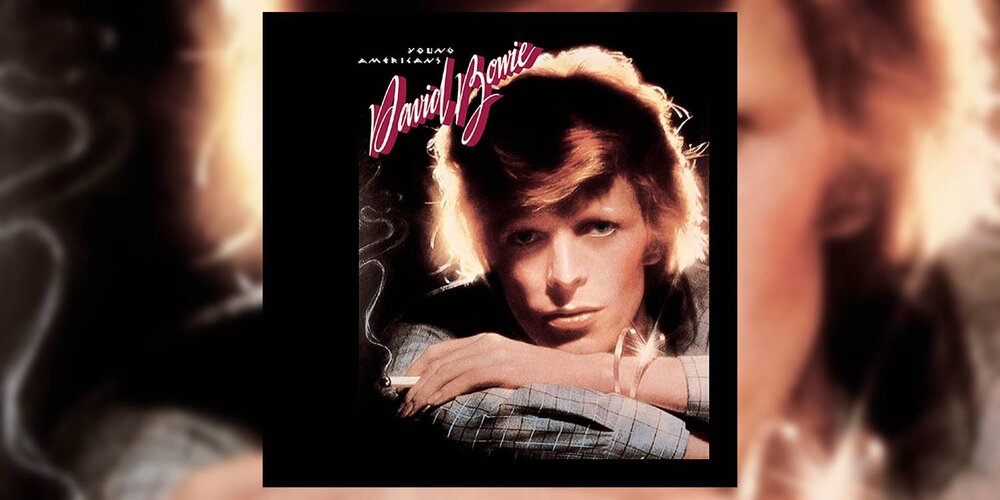
Happy 45th Anniversary to David Bowie’s ninth studio album Young Americans, originally released March 7, 1975.
David Bowie made a career out of steadily changing his style of music and reinventing his onstage persona. 1974’s Diamond Dogs was his transition out of his Ziggy Stardust phase and into what Bowie described as his “plastic soul” stage, which gave us the album Young Americans.
This period produced what is arguably one the most fruitful and creative periods in Bowie’s career. It was also his most troubled. In a 1999 performance on the VH1 series Storytellers, Bowie stated, “1975 and 1976 and a bit of 1974…and the first few weeks of 1977, were singularly the darkest days of my life. It was so steeped in awfulness that recall is nigh on impossible, certainly painful.” Bowie’s growing cocaine addiction was a contributing factor to this dark period, yet he made an album that would become his best-selling album at the time.
Over many decades, numerous British musicians have enthusiastically demonstrated their love and affinity towards American R&B/Soul music and Bowie was no exception. For his new, soulful sound, Bowie wanted to hire some new musicians and he gave his assistant a wish list, which included MFSB, the house band for Sigma Sound Studios in Philadelphia. The strings and horn-laden music that was predominant in what was called the Philly Sound commanded the radio airwaves and the charts at this time. Groups like Harold Melvin & the Blue Notes, the Three Degrees, and the aforementioned MFSB had great success around this time and most of their music was recorded at Sigma Sound Studios.
Bowie couldn’t manage to get MFSB because they were unavailable, so he used a variety of musicians including some members of his touring band and newcomers, Bassist Willie Weeks and veteran session drummer Andy Newmark (Sly & the Family Stone, Roxy Music). Guitarist Carlos Alomar took on the role of music director to help Bowie flesh out what he wanted Young Americans to sound like.
The initial recordings began in August of 1974 at Sigma Sound. Bowie brought in longtime collaborator Tony Visconti to produce and engineer the record because he didn’t like the results coming from the studio’s house engineer, Carl Paruolo. He wanted to record the album with the full band playing as opposed to recording each part separately, so he needed someone at the boards that he was familiar with.
During one of the sessions, Alomar brought his wife, backup singer Robin Clark, and Luther Vandross to watch the band work on the title track. As the session went on, Vandross came up with an idea that would eventually become one of music’s most recognized choruses. Vandross told SPIN Magazine in 1987 about a conversation he had with Clark during the session, recalling that he had suggested, “What if there was a phrase that went, ‘Young American, young American, he was the young American – all right!’ Now, when ‘all right’ comes up, jump over me and go into harmony.” Bowie overheard the conversation and thought it was a brilliant idea. He invited the pair to join the session. Bowie began to consult with Vandross about many of the songs, which led to him (Vandross) arranging all the vocals and singing backup with Clark and Ava Cherry, who was Bowie’s girlfriend at the time. The entire song was recorded live with the band with the exception of David Sanborn’s saxophone, which was added later.
Another important Vandross contribution to Young Americans was a song he was working on called “Funky Music.” While working on the arrangements for the album, Vandross was singing “Funky Music” and Bowie heard the song and asked if he could record it. Vandross replied “You’re David Bowie. I live at home with my mother, you can do what you like.” Bowie made some revisions and re-titled the song “Fascination,” with Vandross getting a co-writing credit. The bulk of the songs were written at the studio with Bowie giving the musicians room to collaborate. When listening to Young Americans, you get a sense of chill. No pyrotechnics or gimmicks that might have been associated with Bowie’s previous output.
Bowie had been known to be a tireless worker in the studio, but on Young Americans, he worked even harder than he had before. He wanted commercial success in the States and to make a record that honored a genre that he loved and respected.
Bowie’s Young Americans stands out in his prolific discography because nothing else in his catalog sounds like it. It was a much needed break from his previous records. It still holds up and is a great lead-in to Station to Station (1976). It’s unquestionably one of Bowie’s best.
Leave a Reply